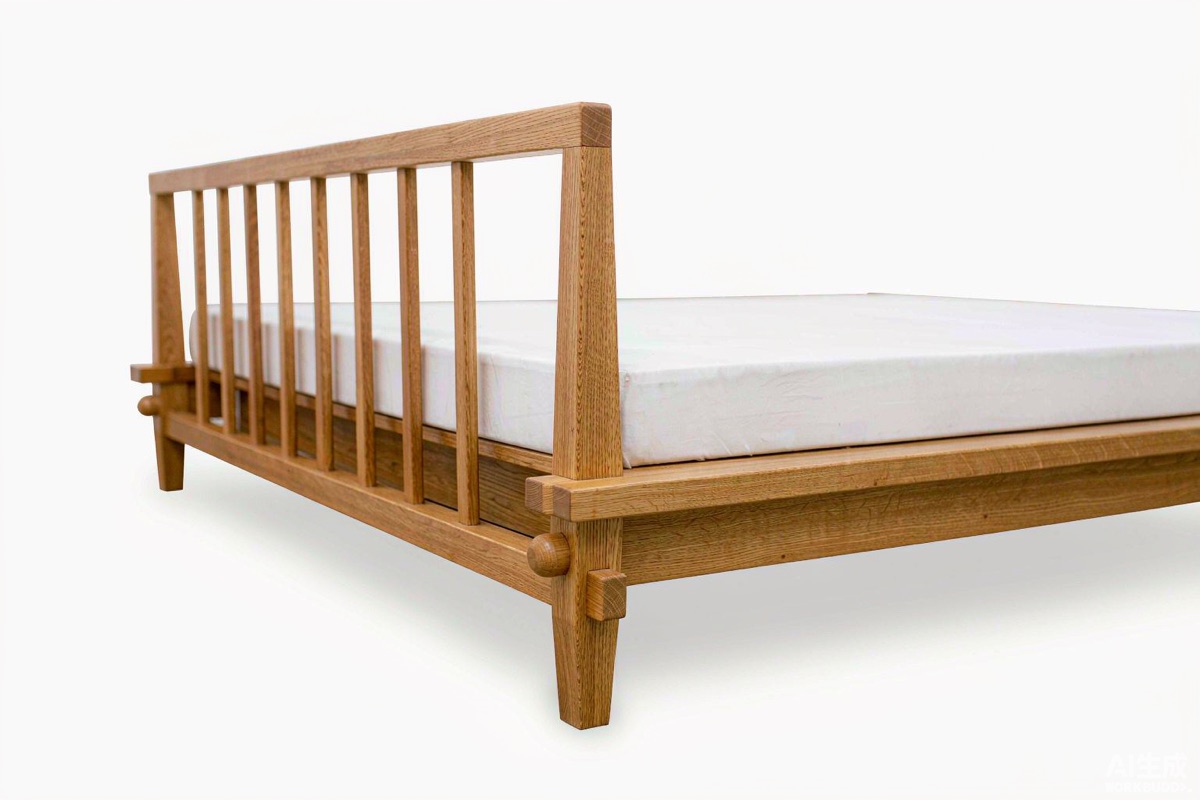
A good solid wood bed brings natural texture to a bedroom and can offer a durable, repairable structure. But wood species alone does not determine quality. The connections between the rails and legs, the center support, and the platform beneath your mattress all matter.
That is why mortise-and-tenon beds and products marketed as Japanese joinery beds deserve a closer look. Their appeal is practical as well as visual: carefully fitted wooden joints can help a frame resist movement while making some modern designs straightforward to assemble.
Our earlier FlexiSpot bed-frame comparison maps Kana, Retro, Cloud and the wider lineup. This guide takes the next step: understanding the construction before choosing a model.
What makes a bed a solid wood bed?
Solid wood means the component is made from wood itself, rather than wood fibers or particles bonded into a panel. It can be one piece or multiple pieces joined together. The phrase does not automatically mean every rail, slat and headboard panel uses the same material.
A frame may combine solid wood legs and rails with a veneered headboard, plywood slats or a metal center beam. Those combinations can be sensible engineering choices. The useful question is which material is used in each component, rather than whether the whole product fits a simple label.
| Description | What it tells you | What to check |
|---|---|---|
| Solid rubberwood | A hardwood used in furniture; different from oak or walnut. | Rail and leg dimensions, drying, joints and protective finish. |
| Solid oak, walnut or acacia | A wood-species claim for the specified components. | Whether it applies to the frame, headboard, slats or all three. |
| Pine | A softwood often used in accessible-price furniture. | Dent resistance, component thickness and support design. |
| Wood veneer | A thin layer of real wood over another material. | The underlying material; veneer can cover solid wood or an engineered panel. |
| Oak / Walnut finish | A color or appearance label. | The material field: an oak-colored frame may be rubberwood. |
Natural grain, the possibility of repairing some surface damage, and long service life are good reasons to consider solid wood. Balance those advantages against weight, cost and movement with humidity. A well-designed engineered-wood or metal frame can also be durable; a solid wood label alone cannot compensate for poor joints or inadequate mattress support.
What is mortise-and-tenon joinery?
A tenon is a projecting section shaped on the end of one piece of wood. A mortise is the matching hole or recess in another. The tenon fits into the mortise, joining the two components. The surrounding shoulders help locate the parts and, depending on the design, transfer loads through contact between their surfaces.
The technique has a long history across multiple woodworking traditions, including Chinese and Japanese furniture-making. “Japanese joinery” is a broader term, not the name of one standardized joint. A bed sold under that description may use cross-shaped interlocks, other fitted wooden connections, or a combination of joinery and hardware.
Traditional joints can be glued, pegged or wedged. Modern beds designed for moving may use detachable interlocking joints instead. Mortise-and-tenon does not automatically mean tool-free, glue-free or entirely metal-free. Look at the assembly manual to see how the corners, center support and headboard actually connect.
What are the benefits of a joinery bed?
1. A fitted connection can resist movement
Well-cut joints provide mating surfaces that locate the rails and legs and help resist sideways movement, often called racking. Their performance depends on joint geometry, fit, wood quality and the rest of the frame. A loose or poorly designed wooden joint is not automatically stronger than a well-designed bolted connection.
2. Some designs make assembly and moving easier
Detachable joinery can reduce the number of loose fasteners and tools needed during setup. This is useful for renters and anyone expecting another move. Check disassembly instructions too: a permanent glued joint is not intended for repeated separation, and heavy rails still need careful handling.
3. Less movement can mean fewer opportunities for squeaks
A snug connection can reduce rubbing caused by movement. But wooden joints can also squeak. Slats, headboards, center legs and uneven floors are other possible sources of noise. Treat “noise-free” as a manufacturer claim, not a lifetime guarantee of silence.
4. Clean lines suit exposed-wood bedrooms
Concealed connections can keep brackets and screw heads out of view. This works well with minimalist and Japandi interiors, where the shape and grain of the frame are prominent. The same construction can also appear in more traditional furniture.
5. Serviceability can support a longer useful life
A frame designed to come apart may be easier to transport, inspect and repair. The practical value depends on replacement-part availability and the condition of the joints. Repeatedly forcing a tight connection can damage it, so follow the maker’s instructions rather than assuming unlimited reassembly.
Four FlexiSpot joinery-bed buying options
These picks cover a simple platform, a storage-headboard configuration and two official-store design choices. The first two are Hako G2 configurations, not separate bed families. We have not established that Amazon Hako and official-store Kana models are identical, so specifications and warranties should not be transferred between them.
Hako G2 Queen — Natural Oak, no headboard
The checked listing identifies this as a solid rubberwood Queen platform with Japanese joinery and tool-free assembly. The selected configuration is “No Headboard – Square Legs.” Natural Oak describes its appearance; it is not evidence of solid oak construction.
Why shortlist it: a straightforward option if you want exposed wood and do not need an attached headboard. It avoids paying for a headboard you may not use and leaves the wall treatment up to you.
Check before buying: the selected size, slat spacing and any future headboard compatibility. A headboard material field elsewhere in a listing does not override a no-headboard package selection.
View Hako G2 without headboard on Amazon ↗ASIN: B0H3P17C15 · Queen · Natural Oak · no headboard / square legs.
Hako G2 Queen — Walnut, with storage headboard
This Hako G2 listing combines a solid rubberwood frame with a headboard that provides storage behind it. The checked selection is “With Headboard – Round Legs,” in the Walnut color. The listing describes Japanese joinery and tool-free setup.
Why shortlist it: consider this configuration if you want a coordinated bedhead and a place for small bedside essentials. It makes more sense than the bare platform when the headboard is part of your intended bedroom layout.
Check before buying: the extra footprint, headboard height with your mattress, and delivery of both boxes. The retrieved listing contains conflicting capacity figures: 1,500 lb in the main specifications and 1,200 lb in the safety text. Ask the seller to resolve this for your exact version; do not rely on the higher figure.
View Hako G2 with headboard on Amazon ↗ASIN: B0G35VVZ53 · Queen · Walnut · headboard / round legs.
Kana Japanese Joinery Bed — Oak
Kana is the official-store starting point for a simple exposed-wood bed. Its page describes Japanese joinery and lists solid rubberwood for the frame. The Oak label should therefore be read separately from the underlying species.
Why shortlist it: it offers a direct route to the manufacturer’s configuration choices and support information. It is a sensible starting point when you already own a mattress and want to choose the bed around it.
Check before buying: your exact size, headboard selection, center support and full package cost. Do not assume a headboard shown in a room photograph comes with the base configuration.
For the wider context, see how Kana compares with Retro and Cloud.
Explore Kana Oak at FlexiSpot ↗Kana Retro Japanese Joinery Bed
Kana Retro combines a more prominent mid-century design with cross-shaped joinery and optional headboard arrangements. The technical material section lists solid rubberwood with North American black walnut or white oak veneer, depending on the option. It should not be described as an all-solid-walnut or all-solid-oak bed.
Why shortlist it: choose Retro when its appearance and headboard options are part of the appeal. Real wood veneer over a solid-wood structure can be a deliberate design choice; it is different from a printed wood-look surface.
Check before buying: confirm the material breakdown for your selected finish and whether the package includes the pictured headboard. Compare equivalent sizes and complete configurations with Kana.
Explore Kana Retro at FlexiSpot ↗Our practical choice: start with the bare Hako G2 or Kana if you want a simple platform; compare the Hako G2 headboard configuration if small-item storage matters; consider Retro if its styling and headboard options justify the complete package cost. These are fit-based recommendations, not a tested performance ranking.
How to choose a solid wood joinery bed
- Match your mattress and its support requirements. Check the actual mattress dimensions, maximum permitted slat gap, center support requirements and whether a foundation is needed. Slat count alone does not tell you the gap between slats.
- Look beyond the corners. Ask how the slats, center beam and center legs carry weight. Good corner joints cannot compensate for an unsupported middle. Check how the published load limit is defined and whether it includes the mattress.
- Get a component-level material description. Identify the rails, legs, slats and headboard separately. Finish labels, veneer species and the material underneath are different facts.
- Measure the full footprint. Frame edges and headboards extend beyond the mattress. Allow walking space, access to outlets and sufficient under-bed clearance for your intended storage.
- Read the assembly and moving instructions. Confirm tools, the number of people needed, package weights and whether the joints are designed to be dismantled. “Tool-free” does not mean one person can safely handle every part.
- Compare the delivered package. Use the same bed size and headboard specification, then check shipping, tax, return shipping, restocking conditions and warranty coverage. Marketplace and direct-store policies can differ.
- Ask what a certification covers. If emissions or sourcing matters to you, request the relevant report or certificate for the exact product and its scope. A testing-company name in a title is not a complete explanation of what was tested.
For a broader look at the manufacturer, visit our FlexiSpot brand hub. For other frame styles, return to the complete FlexiSpot bed lineup.
How to care for a wooden joinery bed
Keep indoor conditions reasonably stable and avoid placing the frame directly beside a heater or in persistent dampness. Dust with a soft cloth and follow the specified finish-care instructions. Wipe spills promptly; do not assume every finish tolerates the same cleaner, oil or polish.
If the frame develops a squeak, first check that it sits level, its support legs contact the floor correctly, and the slats and joints remain seated as instructed. Avoid improvised glue, lubrication or extra screws unless the manufacturer recommends them. When moving, disassemble where permitted instead of dragging the assembled frame across the room.
Frequently asked questions
Are mortise-and-tenon beds better than beds with screws?
Not automatically. A well-designed joint can be stable and convenient, but wood quality, fit, slat support and assembly matter more than the absence of visible screws. Good hardware connections can also perform well.
Does Japanese joinery mean the bed is made in Japan?
No. It describes a construction tradition or design approach. Verify the manufacturing origin separately if it matters to you.
Will a joinery bed always be silent?
No. Joint fit can help reduce movement, but squeaks may come from slats, headboards, floor contact or wear. We have not independently tested the noise claims of these products.
Is rubberwood real solid wood?
Yes, solid rubberwood is real wood. It is a different species from oak or walnut. A rubberwood bed with a Walnut finish is not a solid-walnut bed.
Is a veneered bed still worth buying?
It can be. Veneer is real wood, and the structure underneath can be solid wood or an engineered panel. Judge the materials, joints and repair options together. Thin veneer generally allows less aggressive sanding than a substantial solid-wood surface.
Does a wooden platform bed need a box spring?
Many are designed to support a mattress directly, including the checked Hako G2 listings. Your mattress manufacturer’s support requirements still govern suitability; check slat gaps and center support before removing an existing foundation.
Sources and editorial method
Product pages were retrieved on October 25, 2026. Amazon product discovery used SellerSprite, followed by direct checks of both selected Amazon listings. Official-store claims were checked against the Kana and Kana Retro product pages linked above. Material descriptions prioritize the technical fields where promotional wording is broader.
We have not assembled these products or independently verified noise, strength, emissions, certification scope or warranty fulfillment. No live-price, stock, discount or numerical review-rating claims are assigned. Amazon offer panels can vary by address and session. See our research and review method for the site’s general approach.